

Buying Small-Town Acreage in Senoia GA: Well Water, Septic Systems & Zoning Laws Explained
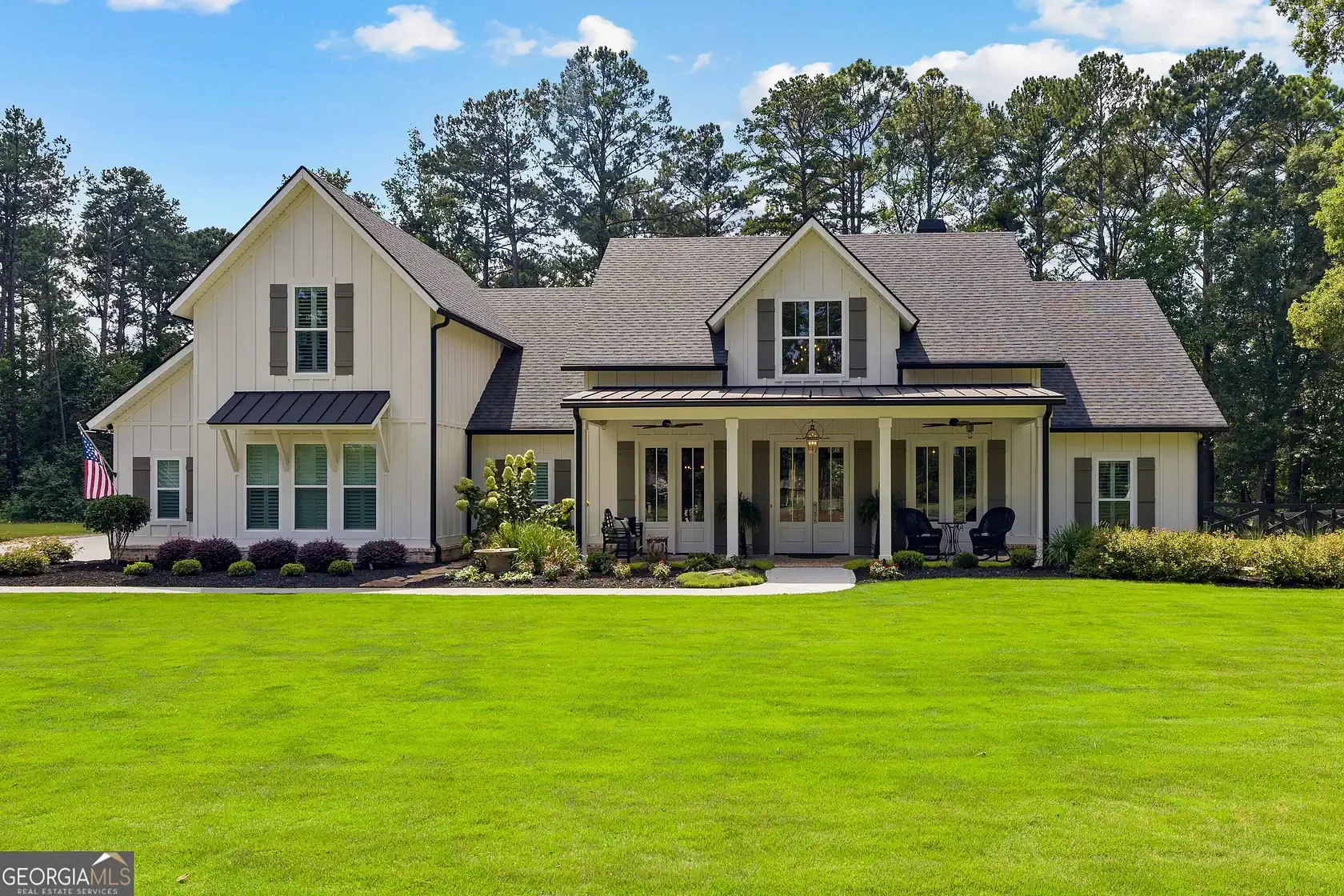
There is something incredibly appealing about buying a home on several acres in Senoia, Georgia.
Instead of a small suburban lot surrounded by neighboring houses, you may have mature trees, open pasture, room for a garden, space for pets, a private driveway, and enough land to create the lifestyle you've always wanted.
That is one reason searches for Senoia GA homes with acreage and Senoia GA land for sale continue to attract attention from buyers who want more space without giving up access to the Atlanta metro area.
But buying acreage is different from buying a traditional subdivision home.
When you're purchasing a five-, eight-, ten-, or twenty-acre property, the house is only part of the equation.
You also need to understand:
Whether the property has public water or a private well
Whether it uses sewer or a septic system
Whether the soil can support a septic drain field
Where a well can legally be located
What the property's zoning allows
Whether the property is inside Senoia city limits or in unincorporated Coweta County
Whether additional homes can be built
Whether the property can potentially be subdivided
Whether there are easements, streams, floodplain or wetlands
What future development could occur nearby
If you're moving to Senoia GA and considering acreage, understanding these issues before you make an offer can save you significant time, money and frustration.
Why Senoia GA Acreage Is So Appealing
Senoia offers an unusual combination for buyers.
You can enjoy a small-town atmosphere while remaining within driving distance of Atlanta, Hartsfield-Jackson Atlanta International Airport, Peachtree City, Fayetteville and Newnan.
The community is known for its historic downtown, locally owned restaurants and shops, parks, trails and year-round events. The Senoia Downtown Development Authority describes downtown as a thriving small-business district with restaurants, boutiques, professional services and other businesses in a walkable historic setting.
The city also maintains recreational opportunities including Marimac Lakes Park, Seavy Street Park and walking trails.
That means acreage buyers don't necessarily have to choose between country living and convenience.
You can potentially have both.
And today's listings demonstrate the variety of acreage available around Senoia. Current listings include properties ranging from roughly five acres to more than 20 acres, with larger tracts also available.
First Question: Is the Property Inside Senoia City Limits?
This is one of the first questions you should ask when looking at Senoia GA land for sale.
A Senoia mailing address does not automatically mean a property is governed by the City of Senoia.
Some properties are within the city limits.
Others are in unincorporated Coweta County.
That distinction can affect:
Zoning
Development regulations
Utilities
Sewer availability
Annexation
Building requirements
Future development potential
The City of Senoia maintains its own zoning map and zoning regulations, while Coweta County has its own zoning and development ordinance.
Before buying acreage, determine exactly which jurisdiction governs the property.
This is especially important if your long-term plan is to build multiple homes, subdivide the land, create an estate property or make another significant improvement.
Understanding Senoia GA Zoning
Zoning is one of the most overlooked parts of buying land.
A property can look perfect for your plans and still have zoning restrictions that prevent you from using it the way you envisioned.
Senoia's zoning framework includes residential, multifamily, commercial, industrial, historic and overlay districts.
For example, the city's zoning standards list R-20 Single-Family Residential with a minimum lot area of one-half acre and R-40 Single-Family Residential with a minimum lot area of one acre.
However, acreage alone does not determine what you can build.
Other regulations can affect:
Setbacks
Lot width
Building placement
Access
Buffers
Density
Conservation requirements
Watershed protections
Historic overlays
Subdivision design
There are also conservation-oriented zoning categories.
In one recent Senoia annexation evaluation, the city discussed R-40C conservation zoning and compared it with Coweta County's Rural Conservation zoning, illustrating how the same acreage can have dramatically different development potential depending on the applicable jurisdiction and zoning classification.
Bottom line: Never assume that "10 acres" means you can automatically build 10 houses.
Public Water vs. Private Well Water
When buying acreage, water is a major consideration.
Some properties have access to public water.
Others rely on private wells.
A private well can be perfectly workable, but buyers need to understand that you become responsible for your own water supply and its ongoing maintenance and testing.
The Georgia Department of Public Health recommends that private well owners have bacterial testing performed annually and chemical screening approximately every three years.
Georgia's recommended chemical screening has also been updated to include concerns such as arsenic and lead.
That means a buyer shouldn't simply ask:
"Does the property have a well?"
Ask:
"How old is the well, how deep is it, how much water does it produce, and when was the water last tested?"
What Should You Test When Buying a Home With a Well?
If you're buying an existing home with a private well, consider having the water professionally tested during your due-diligence period.
Testing can provide information about:
Total coliform
Fecal coliform
Nitrates
pH
Minerals
Metals
Arsenic
Other chemical characteristics
Georgia DPH specifically recommends annual bacterial testing and periodic chemical screening for private wells.
This is particularly important because you cannot determine water quality simply by looking at clear water coming from the faucet.
A water test is inexpensive compared with discovering a water-quality problem after closing.
Where Can a Private Well Be Located?
Georgia has specific separation requirements designed to protect groundwater.
According to the Georgia Department of Public Health, an individual private well must be located at least:
10 feet from a sewer line
50 feet from a septic tank
100 feet from a septic absorption field
150 feet from a cesspool or seepage pit
100 feet from an animal or fowl enclosure
Wells also need to be protected from potential contamination sources and flooding.
This becomes extremely important when buying raw land.
Why?
Because you need enough usable space to locate both the well and septic system while maintaining the required separation distances.
A heavily wooded or irregularly shaped property may have plenty of acreage but surprisingly little practical buildable area.
What About Septic Systems in Senoia?
If your acreage doesn't have public sewer, you'll likely need an onsite wastewater system, commonly called a septic system.
Georgia's Department of Public Health regulates onsite sewage management systems, including permitting, inspections, installation and repairs.
Coweta County also has local septic regulations.
The county's ordinance states that septic permits are issued through the environmental health department and that new systems must comply with the applicable Georgia onsite sewage management requirements. Coweta also has additional requirements, including a 100% replacement area for conventional systems and a minimum of 100 feet of nitrification line per bedroom for residences with septic systems.
That's a big deal for acreage buyers.
Why Soil Testing Is So Important
One of the biggest mistakes a first-time land buyer can make is assuming that every piece of acreage is automatically buildable.
It isn't.
A septic system needs suitable soil and enough usable area for the septic tank, drain field and required replacement area.
Before purchasing raw land, you should determine whether the property has suitable areas for an onsite sewage system.
Georgia DPH maintains resources for homeowners and provides information regarding certified soil classifiers, septic installers and pumpers.
A beautiful property with a creek, steep slopes, wetlands or poor soils may have substantially less usable building area than its total acreage suggests.
That's why "How many acres?" should never be the only question.
A better question is:
"How many buildable acres does this property actually have?"
Don't Forget the Septic Replacement Area
Coweta County's septic ordinance is particularly important here.
For conventional systems, the county requires a 100% replacement area.
In simple terms, the property needs additional suitable area reserved for future replacement of the absorption system.
That means you can't necessarily use every open portion of the property for:
A swimming pool
Barn
Detached garage
Guest house
Driveway
Garden
Pasture
Workshop
The septic system and its replacement area need to be considered when planning the entire property.
Public Sewer Can Change the Equation
Not every acreage property requires a septic system.
Some properties may have access to public sewer.
The City of Senoia operates water and wastewater services within its system.
If public sewer is available, it can eliminate some of the limitations associated with onsite wastewater.
But availability matters.
A sewer main being relatively close to the property doesn't necessarily mean connecting is simple or inexpensive.
Before purchasing, verify:
Whether sewer is actually available
Where the connection point is
Whether the property is required to connect
Connection fees
Easements
Extension requirements
Capacity
Whether a lift station is required
Never rely solely on a listing remark that says "sewer nearby."
Verify it with the appropriate utility authority.
What If You Want to Build a Second Home?
This is a common reason people buy acreage.
Maybe you want:
A home for parents
A guest house
A future home for your children
An investment property
A second residence
A rental
A family compound
But don't assume acreage automatically gives you that right.
You need to investigate zoning, minimum lot sizes, subdivision requirements, access, utility availability and septic capacity.
If the property uses septic, the health department may also need to determine whether the site can support additional wastewater flow.
And if you're considering subdivision, the applicable city or county development regulations become even more important.
Can You Subdivide Senoia GA Acreage?
Potentially—but it depends on the property.
The answer may involve:
Current zoning
Minimum lot size
Density
Road frontage
Access
Internal roads
Utility requirements
Septic suitability
Stormwater
Environmental constraints
Subdivision regulations
City or county jurisdiction
Senoia provides applications for subdivision plat review, site-plan review, preliminary annexation zoning review and amendments to the official zoning map.
This is one reason buyers interested in Senoia GA land investment should have the property investigated before assuming a subdivision opportunity exists.
Watch for Floodplain, Creeks and Wetlands
Acreage with water features can be beautiful.
It can also create development limitations.
Before purchasing land, investigate:
Floodplain
Creeks
Streams
Wetlands
Drainage
Stormwater
Steep slopes
Conservation areas
A parcel can contain ten acres but have substantially less usable land after environmental and development constraints are considered.
This is particularly important if you're purchasing land because you intend to build a large home, barn, pool or additional structures.
Acreage Real Estate in Senoia Is Still a Competitive Lifestyle Market
Current market data shows that Senoia remains a relatively higher-priced South Metro Atlanta community.
One September 2026 market snapshot reported a median Senoia listing price around $609,900, while another market source reported a median listing price around $569,000. The differences illustrate why buyers should compare sources and, more importantly, look at property-specific comparable sales rather than relying on one headline number.
Acreage properties can vary dramatically based on:
Land size
Home size
Location
School zone
Improvements
Privacy
Barns
Fencing
Water
Septic
Road frontage
Development potential
In other words, comparing a five-acre estate to a subdivision home isn't necessarily an apples-to-apples comparison.
What Makes Senoia Attractive for Acreage Buyers?
For many buyers, the biggest advantage is lifestyle.
Senoia offers:
Small-town atmosphere
The city has retained much of its historic identity while continuing to grow.
Downtown convenience
Restaurants, boutiques, services and community events create an active downtown environment.
Outdoor recreation
Marimac Lakes, Seavy Street Park and local trails give residents opportunities to spend time outside.
Access to Atlanta
Senoia is roughly 35–40 miles southwest of central Atlanta, with Hartsfield-Jackson Atlanta International Airport roughly 30 miles away depending on the route and starting point. Actual drive times vary significantly with traffic.
More space
For buyers comparing suburban subdivisions with rural or estate properties, acreage can provide privacy that is difficult to find in more densely developed communities.
Schools Are Still Important When Buying Acreage
Families searching for Senoia GA homes near top schools should investigate school zoning for the specific property rather than assuming every Senoia address feeds the same schools.
School attendance boundaries can change, and acreage properties can be located in different parts of the broader Senoia/Coweta County area.
Before making an offer, verify the current assigned schools for the exact parcel and research:
Elementary school
Middle school
High school
School performance
Programs
Transportation
Future boundary changes
School assignment should be treated as a property-specific due-diligence item.
A Senoia Acreage Buying Checklist
If you're considering buying land or a home on acreage, here is a simple checklist to take with you.
Before Making an Offer
☐ Confirm city or county jurisdiction
☐ Verify zoning
☐ Review surrounding zoning
☐ Determine whether public water is available
☐ Determine whether public sewer is available
☐ If well water, obtain well information
☐ Test existing well water
☐ Verify septic permit
☐ Obtain septic records if available
☐ Investigate septic condition
☐ Confirm soil suitability for new construction
☐ Identify septic replacement area
☐ Check floodplain
☐ Investigate streams and wetlands
☐ Review easements
☐ Confirm road access
☐ Check restrictions and covenants
☐ Investigate HOA requirements, if applicable
☐ Determine whether subdivision is possible
☐ Research future development nearby
What Newcomers Should Never Assume About Acreage
There are several common assumptions that can create expensive problems.
"It's five acres, so I can build whatever I want."
Not necessarily.
"There's a well, so the water must be good."
Not necessarily.
Test it.
"There's a septic tank, so the system is fine."
Not necessarily.
Inspect it and obtain records when possible.
"The property is in Senoia, so it has city zoning."
Not necessarily.
Determine the actual jurisdiction.
"The vacant land next door will always stay vacant."
Never assume that.
Research zoning and development activity.
"The entire acreage is usable."
Not necessarily.
Floodplain, slopes, streams, wetlands, setbacks and septic requirements can reduce the practical building area.
Should You Buy Raw Land or a Home With Acreage?
Both can make sense.
Buying Raw Land
Advantages can include:
Designing your own home
Choosing the building site
Creating a custom floor plan
More control over landscaping
Potential long-term appreciation
But you'll need to budget for:
Site work
Driveway
Well
Septic
Utilities
Survey
Soil testing
Engineering
Permits
Construction
Buying an Existing Home on Acreage
This can simplify the process because the property may already have:
A house
Driveway
Well
Septic
Electrical service
Landscaping
Outbuildings
Fencing
But you still need to investigate the condition and legal status of those improvements.
Why a Local Senoia GA Real Estate Agent Matters
Buying acreage requires more than finding a beautiful property online.
You need someone who understands the difference between:
Acreage
and
usable acreage.
Between:
zoned residential
and
actually buildable.
Between:
well water
and
reliable, tested well water.
Between:
existing septic
and
a properly permitted and functioning septic system.
And between:
a property located near Senoia
and
a property actually governed by the City of Senoia.
That local knowledge can be extremely valuable.
A knowledgeable Senoia GA real estate agent can help coordinate the right questions and connect buyers with qualified professionals for inspections, surveys, septic evaluations, soil testing, well testing and other due diligence.
Final Thoughts: Is Buying Acreage in Senoia GA Right for You?
If you've been dreaming about more privacy, more land and a quieter lifestyle, buying acreage in Senoia GA could be an excellent fit.
But don't let the scenery make the decision for you.
Before purchasing, understand the entire property.
Check the zoning.
Verify the jurisdiction.
Investigate water.
Test the well.
Review the septic system.
Confirm soil suitability.
Look at floodplain and environmental constraints.
Understand development rights.
And investigate what may happen around the property in the future.
The best acreage purchase isn't necessarily the property with the most acres.
It's the property where the land, zoning, utilities, location and your long-term goals all work together.
For buyers searching for Senoia GA homes for sale with acreage, rural land for sale in Senoia GA, Senoia GA new construction, or buildable land in Coweta County, doing the homework before closing can make all the difference.
Looking for Acreage or a Home in Senoia GA?
Whether you're searching for a private estate, a few acres to build your dream home, an existing home with land, or an investment opportunity, Tim Stout Group with eXp Realty can help you understand the local Senoia GA real estate market and the unique considerations that come with buying acreage.
If you're selling acreage, we can also help position your property around the features that today's buyers care about—including usable land, privacy, improvements, utilities, zoning and development potential.
Let's help you make the right move—fast, profitable, and stress-free—in Senoia, GA real estate.
Posted by Tim Stout — Top producing Realtor & Real Estate Investor in Senoia. I help families buy, sell, and navigate real estate with ease. Tim@mybrokerage.com
