

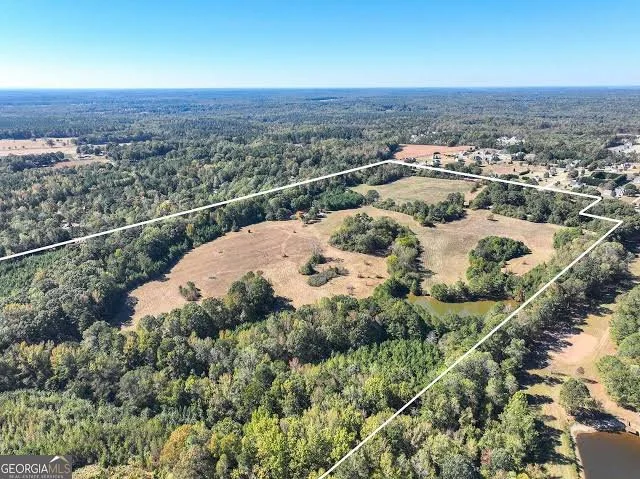
Buying land in Senoia, Georgia, can open the door to exciting possibilities. Maybe you picture building a custom farmhouse, creating a private family estate, keeping horses, starting a small farm, or purchasing several acres as a long-term investment. But before you buy property or begin planning construction, there is one important question to answer: What does the property's zoning actually allow you to build?
Agricultural and residential zoning can look similar when you are driving through the countryside around Senoia. Both may include open fields, trees, large lots, and single-family homes. However, the rules governing those properties can be very different.
Understanding Senoia GA zoning is especially important because the Senoia area includes land governed by two different local jurisdictions: the City of Senoia and unincorporated Coweta County. A Senoia mailing address does not automatically mean the property falls under the city's zoning regulations.
For buyers searching for Senoia GA land for sale, acreage, farms, or homes with room to build, understanding the difference between agricultural and residential zoning can help prevent expensive surprises.
This guide explains the major differences, what you may be able to build, what restrictions to investigate, and how to evaluate land before purchasing it.
1. First, Determine Whether the Property Is in Senoia or Unincorporated Coweta County
This is one of the most important steps when buying land near Senoia.
The City of Senoia has its own zoning ordinance and official zoning map. Coweta County administers zoning and development regulations for properties in unincorporated areas. These are separate systems, and the rules are not interchangeable.
A property can have a Senoia mailing address without being inside the city limits. That means two parcels advertised as Senoia acreage could have different zoning classifications, permitting procedures, and development standards.
Before evaluating what you can build, identify the property's jurisdiction.
For land inside Senoia, use the city's zoning map and zoning ordinance. For land outside the city limits, consult Coweta County's zoning map and Zoning and Development Ordinance.
Coweta County also makes an important distinction between existing land use and zoning. Its land-use information describes how parcels are currently categorized, while the zoning ordinance determines what uses and development are legally allowed. A parcel shown as agricultural or open land on a land-use map is not automatically proof that every agricultural activity or building is permitted.
You can begin your research through the City of Senoia and the Coweta County Land Use and Planning Department.
2. What Agricultural Zoning Means for Senoia-Area Land
Agricultural zoning and rural land-use regulations are generally designed to preserve land for farming, forestry, livestock, and other activities associated with a rural environment.
Depending on the property's exact county zoning district, permitted uses may include activities such as:
Growing crops and maintaining gardens
Raising livestock or poultry
Horse keeping and equestrian activities
Forestry and timber management
Horticulture and plant nurseries
Agricultural storage buildings
Barns, equipment shelters, and certain other farm-related structures
A permitted single-family residence
These are examples of uses that may be allowed under particular rural zoning provisions. They are not a guarantee that every activity is permitted on every Senoia-area property.
Coweta County's Rural Conservation district, for example, allows single-family residential development and certain noncommercial agricultural activities as accessory uses to a residence. The county's ordinance specifically addresses poultry, horses, and livestock, along with location and separation requirements for related structures and animal areas.
This distinction matters. A buyer who wants a home with a few horses may have different zoning considerations from someone planning to operate a commercial farm, boarding stable, nursery, or agricultural business.
Commercial activity can trigger additional approvals, operating restrictions, or other requirements.
3. What Residential Zoning Means
Residential zoning is primarily intended to accommodate housing. Depending on the district, it can regulate the number of homes allowed, minimum lot size, building setbacks, building height, and permitted accessory structures.
Inside the City of Senoia, residential zoning districts include R-20, R-40, R-40 Conservation, R-25C, and other residential classifications.
The city's published zoning ordinance identifies several important distinctions:
R-20 Single-Family Residential: The listed minimum lot area is one-half acre.
R-40 Single-Family Residential: The listed minimum lot area is one acre, with no more than one principal dwelling unit per acre.
R-40 Conservation: This district allows flexibility in lot layout and building placement in response to site conditions. Its development requirements are addressed separately in the city's conservation subdivision regulations.
R-25C: This is another single-family residential classification with separate requirements.
The city also has a multi-family residential district, but that is different from the low-density residential zoning most acreage buyers are considering.
These classifications show why it is important to look beyond the words residential zoning. A half-acre residential lot and a one-acre residential lot may be subject to different development rules, and a conservation subdivision can have a different layout from a conventional subdivision.
For buyers who want to build one custom home, residential zoning may be appropriate. For buyers who want to keep animals, establish a farm operation, or construct multiple agricultural buildings, the permitted-use table and accessory-use standards need closer examination.
4. What Can You Build on Agricultural or Rural Land Near Senoia?
One of the biggest attractions of purchasing acreage is having the flexibility to create a property that fits your lifestyle. However, the exact zoning classification determines which improvements and activities may be allowed.
Here are some common projects buyers ask about when shopping for Senoia GA acreage.
Building a Custom Home
A single-family residence is allowed in several rural and residential zoning districts, subject to the applicable requirements.
In Coweta County's Rural Conservation district, a single-family dwelling is a permitted use. However, the development standards still determine where and how the home can be built.
If you are planning a custom farmhouse, modern country home, or traditional Southern estate, investigate the building site before purchasing the land.
A parcel may have plenty of acreage but still have limitations caused by wetlands, floodplains, steep slopes, septic suitability, access easements, or required setbacks.
Building a Barn or Horse Stable
Horse properties are a common reason buyers look for acreage around Senoia.
A barn, stable, equipment shelter, riding area, or pasture may be possible depending on the zoning district and whether the use is considered an accessory agricultural activity.
Coweta County's Rural Conservation regulations specifically recognize equestrian activities and certain noncommercial agricultural uses. The county also establishes separation requirements for animal-related structures and facilities.
Under the county's published Rural Conservation provisions, related accessory buildings, pens, corrals, and similar facilities generally must be at least 100 feet from property lines and 200 feet from an existing off-site residential dwelling. The ordinance also requires adequate parcel area to accommodate the applicable separation requirements.
That can have a major impact on how much usable land remains for a barn, paddock, pasture, and riding space.
Do not assume that a large parcel automatically allows a commercial boarding stable or riding business. Commercial equestrian operations may require additional approvals.
Keeping Chickens, Goats, or Other Livestock
Some buyers want a small hobby farm rather than a full agricultural operation.
They may envision keeping chickens, goats, horses, or other animals while using the property primarily as a residence.
Coweta County's Rural Conservation provisions address noncommercial agricultural activities, including poultry, horses, and livestock, as accessory uses to a single-family dwelling for the benefit of the occupants.
The distinction between noncommercial and commercial activity is important. Keeping a few animals for personal use is not necessarily treated the same as breeding, boarding, selling, or operating an agricultural business.
Before buying land, ask the county how your intended animals and activities are classified and whether any additional conditions apply.
Building a Workshop or Detached Garage
A detached garage, workshop, storage building, or equipment shelter is another popular improvement for acreage buyers.
These structures may be allowed as accessory uses when they are related to an authorized principal use. However, their size, placement, height, and location can be regulated.
For example, a workshop used for personal projects may be treated differently from a commercial repair business that generates customer traffic.
Buyers should verify accessory-building standards, setbacks, driveway access, building permits, and any applicable fire or utility requirements before beginning construction.
Creating a Family Estate With Multiple Homes
Some buyers purchase larger tracts because they want to build a home for themselves and eventually provide housing for children, parents, or other family members.
This is where zoning becomes especially important.
Owning ten acres does not automatically mean you can build five separate houses. The number of permitted dwellings depends on the zoning classification, development type, density standards, lot configuration, access, infrastructure, and subdivision rules.
Coweta County's Rural Conservation regulations include specific provisions for residential homestead lots. The ordinance identifies certain family-related homestead opportunities, subject to eligibility, acreage, water-service, and approval requirements.
For example, the published provisions identify a 1.6-acre homestead lot when served by public water and a 2-acre homestead lot under the specified conditions when public water and sewer are not available. These provisions include family relationship requirements and are not a general permission to divide any rural property into smaller lots.
If your goal is to create multiple legal homesites, obtain written guidance from the county before purchasing the property.
5. Residential Zoning Versus Agricultural and Rural Conservation Zoning
The biggest difference between residential and agricultural-oriented zoning is the range of land uses each district is designed to accommodate.
Property considerationResidential zoningAgricultural or rural conservation zoningPrimary purposeResidential developmentAgriculture and low-density rural livingSingle-family homeGenerally allowed in designated districtsAllowed in qualifying rural districtsMultiple homesControlled by density and subdivision rulesControlled by rural development and homestead provisionsLivestockDepends on district and applicable rulesCertain noncommercial livestock activities may be allowedFarmingDepends on districtAgricultural activities are a recognized land useBarns and farm buildingsMust qualify under accessory-use rulesMay be allowed subject to use and setback requirementsCommercial agricultureOften restrictedMay require additional approval depending on the activitySeptic and waterDepends on available infrastructure and site approvalWell or public water may be allowed, with wastewater suitability still important
This is a general comparison, not a substitute for checking the exact zoning district.
It is also worth noting that Coweta County's rural land regulations do not rely on a simple agricultural-versus-residential distinction. The Rural Conservation district combines agricultural land uses with low-density residential development. Other county districts have their own permitted-use and dimensional requirements.
That is why buyers should ask for the actual zoning designation rather than relying on a listing description that calls a property agricultural, residential, or estate acreage.
6. Minimum Lot Sizes, Setbacks, and Building Restrictions
A property can be zoned for the use you want and still have physical limitations that prevent your project from fitting on the land.
Minimum lot size is only one part of the equation.
Minimum Lot Size
Inside Senoia, the published standards for the R-20 district identify a one-half-acre minimum lot area, while R-40 identifies a one-acre minimum lot area.
Coweta County has separate rural development standards. Its Rural Conservation district includes multiple development types, including conservation subdivisions and estate-lot options.
The county's dimensional requirements also account for the availability of infrastructure and whether a proposed lot can support an approved conventional septic system.
Never assume that a parcel can be divided simply because it is larger than the minimum lot size.
Setbacks
Setbacks establish how far buildings and certain improvements must be located from property lines, roads, and other regulated features.
They can affect where you place:
Your primary residence
A detached garage
A barn or stable
A workshop
Animal enclosures
Driveways and other site improvements
A property with a narrow shape, unusual boundaries, or multiple easements may have less buildable space than its acreage suggests.
Building Height and Lot Coverage
Local zoning regulations can also limit building height and the amount of land covered by structures or other improvements.
This matters if you are considering a large custom home, a multi-level barn, a detached garage, or several outbuildings.
The applicable standards depend on the jurisdiction and zoning district.
7. Septic, Well Water, and Utilities: Can the Land Support Your Plans?
Zoning approval is only one part of determining whether land is buildable.
Many properties outside established subdivisions rely on individual septic systems and wells or public water. Buyers should understand the property's utility situation before making an offer.
Septic System Approval
A parcel may meet the minimum acreage requirement but still lack a suitable location for a septic system.
Soil conditions, slope, drainage, groundwater, available space, and required separation distances all matter.
For a property that has never been developed, ask whether a soil evaluation and septic site approval have been completed. If not, investigate the process and potential cost before committing to the purchase.
You should also determine whether there is enough suitable area for both the initial septic system and any required replacement area.
Well Water or Public Water
Some rural properties use private wells, while others have access to public water.
Coweta County's Rural Conservation regulations identify a well or public water system as an acceptable water source for lots in that district, subject to applicable requirements.
If a public water line is nearby, do not assume that connection is automatic or inexpensive. Verify availability, connection costs, capacity, and any required extensions.
For private wells, buyers should investigate water quality, well condition, location, and applicable permitting requirements.
Electricity, Internet, and Driveway Access
A remote parcel may also require additional planning for power, internet, and road access.
Check whether utility services already reach the property or whether extensions will be necessary.
If the land is accessed through a private road or easement, review the recorded documents and confirm that the access arrangement satisfies applicable development requirements.
A beautiful piece of acreage can become a much more expensive project if utilities and access have not been properly evaluated.
8. Environmental Restrictions That Can Affect What You Build
Not every part of a property is necessarily suitable for construction.
Senoia and Coweta County have regulations that address environmental protection, drainage, tree preservation, watershed areas, flood hazards, and stream corridors.
These restrictions can affect the placement of a home, driveway, barn, septic system, or other improvements.
Important features to investigate include:
Floodplains: Land within a designated flood hazard area may have development limitations or additional construction requirements.
Streams and buffers: Stream corridors can require protected buffer areas that limit clearing, grading, and construction.
Wetlands: Wetland areas may require additional environmental review and approvals before certain activities can occur.
Steep slopes: Sloping terrain can increase construction costs and limit the available building area.
Tree preservation: Clearing and land disturbance may be subject to local tree protection and development requirements.
Coweta County's development ordinance includes separate provisions for stream corridor protection, wetlands, flood damage prevention, and tree preservation.
Inside the City of Senoia, watershed protection overlays and other zoning overlays can add requirements beyond the underlying zoning district.
A survey and site evaluation can help identify these issues before you purchase land.
9. Can You Rezone Agricultural Land to Residential?
Sometimes buyers find a property that has the acreage and location they want but does not have the zoning needed for their intended project.
In certain circumstances, rezoning may be possible. However, approval is not guaranteed.
A rezoning request generally requires an application and review by the appropriate local government. The decision may consider the comprehensive plan, surrounding land uses, road access, infrastructure, environmental conditions, and compatibility with nearby properties.
Inside Senoia, zoning requests are handled through the city's planning process and applicable public review procedures.
For unincorporated properties, Coweta County's Zoning Division coordinates rezoning applications, conditional use requests, variances, and related reviews.
It is important to understand that rezoning can take time and involve professional fees, application costs, public hearings, and uncertainty.
If your purchase depends on receiving a zoning change, speak with the appropriate planning department before closing. A seller's belief that a property can be rezoned is not the same as an approved zoning decision.
10. What Senoia Land Buyers Should Investigate Before Making an Offer
When shopping for Senoia GA land for sale, it is easy to focus on the view, acreage, trees, and price.
Those features matter, but the property's development potential is just as important.
Before making an offer, consider this checklist:
Confirm whether the property is inside the City of Senoia or unincorporated Coweta County.
Obtain the parcel identification number and verify the official zoning classification.
Review the permitted-use regulations for that specific district.
Confirm whether your planned home, barn, animals, workshop, or business activity is allowed.
Review minimum lot size, setbacks, density, and subdivision restrictions.
Check whether the property has legal and adequate road access.
Investigate public water, private well, electricity, internet, and wastewater options.
Request septic suitability information when applicable.
Review floodplain, wetland, stream-buffer, and other environmental constraints.
Check for recorded easements, deed restrictions, conservation easements, and property-owner association rules.
Determine whether building permits, land-disturbance approvals, or other reviews will be required.
Get important zoning and development questions answered in writing before closing.
A real estate listing can provide a helpful introduction to a property, but it is not a substitute for official zoning verification.
11. How Agricultural and Residential Zoning Affect Senoia Land Values
Zoning can have a meaningful impact on the marketability and value of land.
Two properties with similar acreage may have very different values because one offers more development flexibility, better access, available utilities, or a more favorable building site.
For example, a five-acre property with a suitable homesite, public water, approved septic area, and convenient road access may attract a different buyer pool than five acres with extensive wetlands, limited access, or uncertain development potential.
Agricultural and rural properties may appeal to buyers interested in:
Building a custom country home
Establishing a small hobby farm
Keeping horses or other animals
Purchasing additional privacy
Creating a family estate
Holding land as a long-term investment
Residentially zoned properties may appeal to buyers who prioritize a traditional home site or a property with a clearer path toward residential construction.
For sellers, understanding the zoning classification can help communicate the property's potential accurately. If the land has an approved septic site, an established driveway, utility access, or documented development approvals, those details may be valuable to prospective buyers.
However, never advertise a property as suitable for a particular use without confirming the applicable approvals.
If you are wondering how much your acreage is worth, a land-specific market analysis should consider zoning, location, access, utilities, usable acreage, topography, comparable land sales, and current buyer demand.
12. Why Working With a Local Senoia Real Estate Professional Matters
Buying land is different from purchasing an existing home.
With a house, buyers can evaluate the structure, layout, condition, and neighborhood. With vacant land, much of the value depends on what the property can legally and practically support in the future.
That is why local real estate knowledge is important.
A real estate professional familiar with Senoia and Coweta County can help you identify relevant property information, understand the questions that need to be answered, compare available acreage, and coordinate due diligence with the appropriate professionals.
For buyers, this can mean avoiding land that does not support their intended plans.
For sellers, it can mean presenting the property accurately and helping buyers understand its documented features and development potential.
Your real estate agent does not replace the planning department, surveyor, septic professional, engineer, or attorney. Instead, the agent helps coordinate the transaction and identify important questions before they become costly problems.
Frequently Asked Questions About Senoia Agricultural and Residential Zoning
Can I build a house on agricultural land near Senoia?
A single-family home may be permitted in certain rural and agricultural-oriented zoning districts, including Coweta County's Rural Conservation district. The property's specific classification, lot requirements, access, utilities, and building approvals must be verified.
Can I keep horses on residential property in Senoia?
It depends on the property's jurisdiction and zoning classification. Coweta County's Rural Conservation regulations address certain noncommercial equestrian and livestock activities. Do not assume the same rules apply to every residential district or property inside Senoia city limits.
How many acres do I need to build a house near Senoia?
There is no single acreage requirement for every property. Inside Senoia, published R-20 and R-40 minimum lot areas differ. Coweta County has separate requirements based on its rural development classifications, utilities, and septic suitability.
Can I build a barn on residentially zoned property?
A barn may qualify as an accessory structure in some circumstances, but the use, size, location, and applicable accessory-building regulations matter. Confirm whether the proposed building is allowed under the property's zoning.
Can I divide my Senoia acreage into multiple homesites?
Possibly, but subdivision potential depends on zoning, density, minimum lot dimensions, access, utilities, environmental constraints, and subdivision approval. The amount of acreage alone does not establish how many homesites can be created.
Is agricultural zoning better than residential zoning?
Neither is automatically better. Agricultural or rural zoning may be more suitable for buyers who want farming, equestrian activities, or rural living. Residential zoning may be more appropriate for buyers focused on housing. The right classification depends on your plans for the property.
Who do I contact to verify zoning in Senoia?
For properties inside Senoia city limits, contact the City of Senoia Building and Zoning Department at 770-599-3679. For unincorporated Coweta County properties, contact the Coweta County Zoning Division through the county's official website.
Final Thoughts: Understand the Zoning Before You Buy Senoia Land
Senoia offers an appealing mix of rural property, custom homes, established neighborhoods, and growing residential areas. Whether you want to build a farmhouse, create a private estate, keep horses, establish a hobby farm, or purchase land as an investment, the possibilities depend on more than the number of acres.
Agricultural and residential zoning determine how land may be used, while setbacks, septic suitability, access, utilities, environmental restrictions, and subdivision regulations determine what can realistically be developed.
The most important step is to verify the property's exact jurisdiction and zoning before making assumptions about what you can build.
If you are searching for Senoia GA land for sale, considering a custom home build, or preparing to sell acreage, the Tim Stout Group with eXp Realty can help you navigate the local real estate market and identify the right questions to ask during due diligence.
For real estate guidance in Senoia, Newnan, Peachtree City, and the surrounding areas, contact Tim Stout at (678) 967-3367 or visit https://fayetteandcowetahomes.com.
When it comes to buying or selling land, having knowledgeable local real estate professionals on your side can make all the difference.
Posted by Tim Stout — Top producing Realtor & Real Estate Investor in Senoia. I help families buy, sell, and navigate real estate with ease. Tim@mybrokerage.com
