

Buying Land and Acreage in Senoia, GA: Well Water, Septic Systems, and Zoning Rules Explained
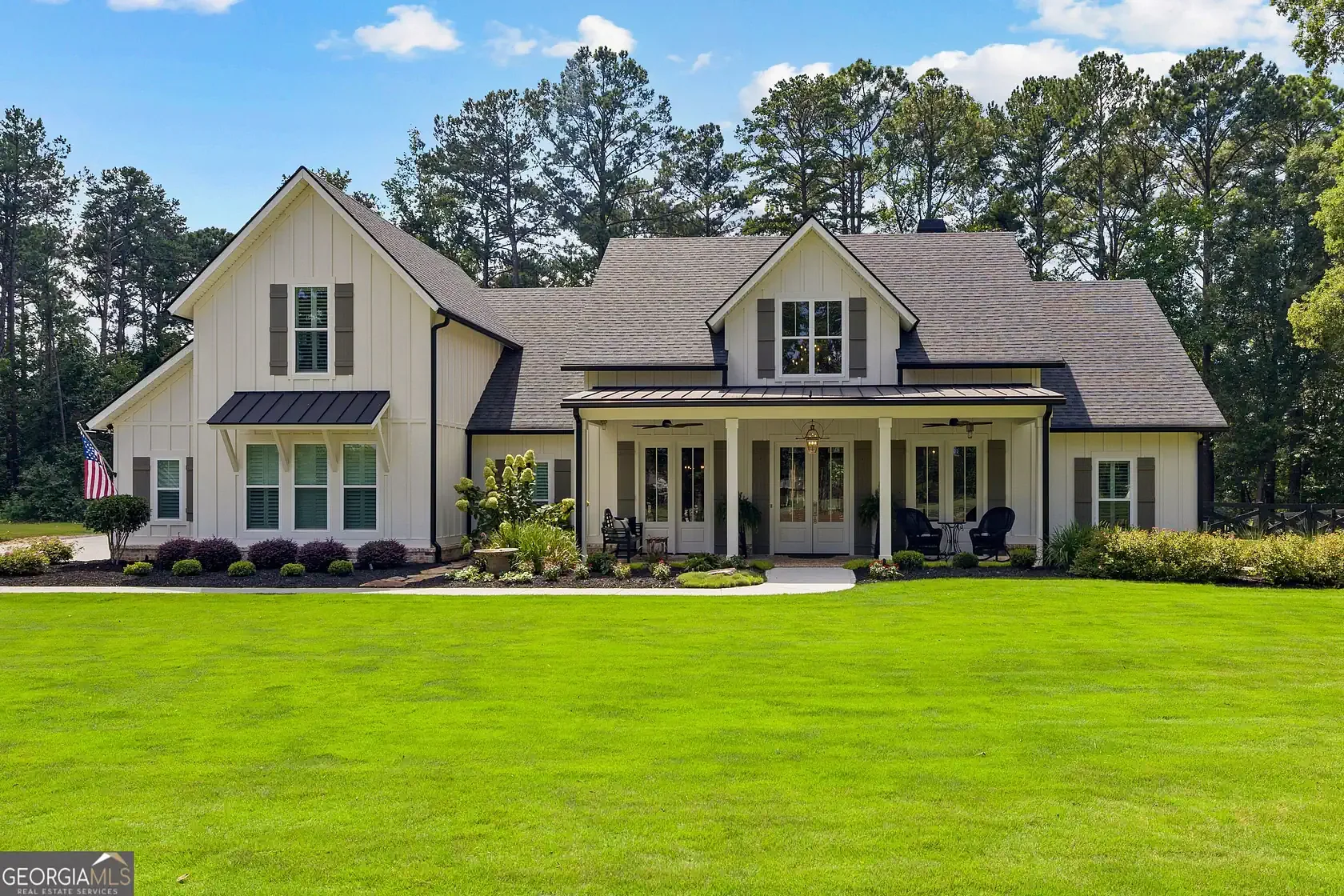
Imagine finding five, ten, or even twenty acres outside Senoia, Georgia. The property has mature trees, open space, room for a custom home, and the privacy you've been searching for. You can picture a long driveway, a spacious backyard, a workshop, a garden, and plenty of room to enjoy the outdoors.
For many buyers, that is the appeal of buying land in Senoia, GA.
The Senoia area offers opportunities to explore rural properties, homes on acreage, and land for custom construction while remaining within reach of downtown Senoia and the broader Atlanta region. But purchasing acreage is different from buying an existing home.
A vacant parcel may look perfect and still present challenges involving zoning, road access, water availability, septic-system approval, drainage, or building restrictions.
Before making an offer on Senoia GA land for sale, it is important to understand three major considerations:
Zoning: What are you legally allowed to build or do on the property?
Water and wastewater: Can the property support a private well, public water connection, septic system, or another approved arrangement?
Buildable area: How much of the acreage can realistically accommodate a home, driveway, utilities, and other improvements?
These details can influence your construction budget, timeline, and the property's overall usefulness.
This guide explains what prospective land buyers should investigate before purchasing acreage in Senoia and Coweta County.
Why Buyers Are Looking for Land Around Senoia, GA
Senoia is known for its historic downtown, independent businesses, community events, and small-town atmosphere. Outside the more developed areas, buyers may also find properties offering larger lots, open land, wooded settings, and opportunities to build a custom home.
Depending on the property, acreage may appeal to buyers who want:
A custom-built home with a personalized floor plan
More separation from neighboring homes
Space for gardens, outdoor entertaining, or recreation
A detached garage, workshop, or other permitted accessory structure
Room for certain agricultural or hobby uses
A long-term land investment
A home with a larger yard than a typical subdivision lot
However, the number of acres alone does not tell you how the land can be used.
A ten-acre parcel may include steep slopes, wetlands, drainage areas, utility easements, or land unsuitable for a conventional septic system. A smaller parcel with a well-planned building site may be easier to develop.
The key question is not just how much land you are buying. It is how much of that land is suitable for your intended use.
Step One: Determine Whether the Property Is Inside Senoia or Unincorporated Coweta County
This is one of the most important steps when buying acreage in the Senoia area.
A property may have a Senoia mailing address without being located inside the incorporated City of Senoia. Properties within the city limits and properties in unincorporated Coweta County can be subject to different zoning ordinances, permitting procedures, development standards, and utility arrangements.
That distinction can affect what you can build, how you obtain permits, and which department you need to contact.
Buying Land Inside the City of Senoia
The City of Senoia has its own zoning regulations and Building and Zoning Department.
The city's zoning code includes residential districts such as R-20 and R-40, along with other classifications for multifamily housing, commercial uses, office and institutional properties, historic areas, and industrial uses.
For example, the city's zoning ordinance lists a minimum lot area of one-half acre for its R-20 single-family residential district and one acre for its R-40 single-family residential district, subject to the applicable code provisions.
These examples should not be interpreted as a guarantee that any parcel of that size can be developed. Other standards, site constraints, subdivision rules, and permitting requirements may apply.
Review the City of Senoia zoning ordinance and contact the city's Building and Zoning Department to verify the requirements for a specific property.
Buying Acreage in Unincorporated Coweta County
Land outside Senoia's city limits is generally subject to the applicable Coweta County zoning and development regulations.
The county provides a Zoning Division resource page with information about zoning applications, variances, conditional-use permits, and development review.
Coweta County also offers a land-use information page that explains its land-use categories and directs visitors to zoning and utility mapping resources.
Before buying, verify:
The parcel's current zoning classification
The uses permitted under that classification
Minimum lot-size and dimensional requirements
Setbacks and building placement rules
Restrictions on accessory structures
Whether subdivision is allowed
Whether rezoning or another approval would be necessary
Whether any overlays or recorded restrictions apply
Do not rely exclusively on a listing description that says a parcel is suitable for a custom home or has unrestricted potential.
Ask the relevant planning department to confirm what the current rules allow.
Step Two: Understand Whether the Property Has Public Water or Requires a Private Well
Water availability is another major consideration when purchasing rural land.
Some properties may have access to public water, while others may require a private well. Even when a water line appears nearby, the existence of that line does not automatically mean the property can connect to it.
You should verify service availability, connection requirements, applicable fees, and any necessary extensions directly with the relevant utility provider.
Coweta County provides a land-use and mapping resource that directs users to water and sewer connectivity information.
What Does Owning a Private Well Involve?
A private well draws groundwater for household use. If the property depends on a well, you will want to understand the proposed well location, installation requirements, expected water quality, and ongoing maintenance responsibilities.
A private well should be installed by a licensed water-well contractor in accordance with applicable Georgia requirements.
The Georgia Department of Public Health's private-well guidance provides important information about well placement, protection, maintenance, and testing.
Before buying acreage that needs a new well, consider the following questions:
Is a suitable well location available?
Can a licensed contractor assess the feasibility of installing a well?
Are there known water-quality concerns in the immediate area?
Is the proposed well location clear of septic components and other contamination sources?
Will the well be accessible for inspection and maintenance?
Are there any site conditions that could complicate installation?
A neighboring property having a successful well does not guarantee that a new well on your parcel will produce the same quantity or quality of water.
How Should Private Well Water Be Tested?
Water quality should never be assumed based on appearance, taste, or the fact that a well has been used for years.
Georgia DPH recommends annual bacterial testing for private wells, including total coliform and fecal coliform testing. It also recommends periodic chemical screening, including its updated private-well chemical test profile.
If the property already has a well, arrange appropriate water testing before closing and review any existing well records available from the seller.
If you are buying vacant land and plan to install a new well, ask a licensed contractor and the appropriate local authorities about installation requirements and testing after completion.
You should also investigate the well's condition if an existing property includes an older pump, pressure tank, or other well equipment. Those components can affect maintenance needs and future costs.
How Far Must a Well Be From a Septic System?
Georgia's well-water guidance identifies minimum separation distances intended to help protect groundwater from contamination.
The state's published requirements include:
At least 10 feet from a sewer line
At least 50 feet from a septic tank
At least 100 feet from a septic tank absorption field
At least 150 feet from a cesspool or seepage pit
At least 100 feet from an animal or fowl enclosure
These distances are based on the applicable state requirements and should be confirmed for the proposed site and circumstances.
This is especially important when purchasing raw acreage. You need enough suitable space to place a well and septic system while meeting the applicable separation distances and other requirements.
A parcel may be large but irregularly shaped, heavily wooded, or constrained by streams and easements. Those factors can make locating all the necessary improvements more challenging.
Step Three: Understand Septic Systems Before Buying Land
Many rural properties do not have access to public sewer. In those cases, an approved onsite sewage management system—commonly called a septic system—may be necessary.
But not every piece of land can support a conventional septic system.
The Georgia Department of Public Health regulates onsite sewage management systems, including permitting, installation, inspections, and repairs. Local county environmental health offices administer the process for properties in their jurisdictions.
The state's onsite sewage management resources provide information about the program and relevant requirements.
Why Septic Approval Matters
A septic system needs suitable soil and enough usable land to accommodate its components.
The site's characteristics can affect whether the proposed system is approved and what type of system may be appropriate.
Relevant considerations include:
Soil composition and absorption characteristics
Seasonal high groundwater levels
Depth to bedrock or restrictive soil layers
Slope and drainage
Available space for the absorption field
Required separation from wells, buildings, and property features
The proposed home's bedroom count and expected wastewater demand
Space for any required replacement area
Georgia's onsite sewage regulations require a construction permit before an onsite system is installed. Approval depends on the site's suitability and compliance with applicable requirements.
A property should not be considered ready for construction simply because a listing says it has enough acreage for a septic system.
What Is a Soil Evaluation?
A soil evaluation helps determine whether the site can support a proposed septic system.
A qualified professional evaluates the soil and other site conditions, and the appropriate health authority determines whether the proposed system meets the applicable requirements.
Georgia's onsite sewage rules explain that permits depend on favorable site findings involving absorption rates, soil characteristics, groundwater, rock, and other factors that affect suitability.
For land buyers, this means that reviewing a general soil map can be helpful during preliminary research, but it is not a substitute for the required site-specific evaluation.
If a parcel has never been developed, consider making the purchase contract contingent on satisfactory septic-site findings and other necessary approvals, where appropriate and agreed to by the parties.
This can help reduce the risk of purchasing land that cannot support your intended home.
Does a Larger Lot Automatically Qualify for Septic?
No.
Coweta County's zoning provisions state that even when a proposed residential lot meets the applicable minimum tract-size requirements, the lot may not be approved for development or building unless it contains an adequate site for a conventional onsite septic system.
In other words, meeting the minimum acreage requirement is only one part of the process.
The actual building site and wastewater system must also comply with the relevant rules.
You can review the county's zoning and development information and Georgia's onsite sewage regulations for more information.
Ask About the Replacement Area
When planning a septic system, ask the local environmental health office and qualified septic professionals about any required replacement or reserve area.
That space can be important if the original system eventually needs repair or replacement.
A house, driveway, pool, workshop, or future addition can interfere with the space needed for wastewater infrastructure if the site is not planned carefully.
Before finalizing a building layout, identify the proposed home location, well, septic tank, absorption field, driveway, and other planned improvements together.
Step Four: Find Out How Much of the Acreage Is Actually Buildable
One of the most common mistakes in land buying is treating the total acreage as though every square foot can be used for construction.
That is rarely a safe assumption.
A property may contain areas that are unsuitable or restricted for buildings because of floodplains, wetlands, drainage features, steep slopes, utility easements, setbacks, or septic limitations.
The practical goal is to identify a suitable building envelope: the portion of the parcel where the proposed home and associated improvements can realistically fit while meeting all applicable requirements.
Investigate Floodplains and Drainage
If a property contains a creek, pond, low-lying area, or drainage channel, review the available floodplain information and investigate drainage conditions.
A stream or low area does not automatically make an entire parcel unbuildable. However, the location of flood-prone land can affect the amount of usable space and the placement of structures.
Coweta County's development resources include information about floodplain management and development review. Start with the Development Services Division and request property-specific guidance.
Look for Easements and Access Restrictions
An easement may allow a utility company, neighboring property owner, or another party to use a defined portion of the property for a particular purpose.
Easements can affect where you may place buildings, fences, driveways, and other improvements.
You should also confirm that the property has legal access from a public road or a properly documented private road. A visible driveway or informal path does not, by itself, establish legal access rights.
Review the survey, deed, title commitment, recorded plats, and applicable easement documents with the appropriate professionals.
Check Utilities and Site-Preparation Costs
Even if a parcel is suitable for a home, bringing the property to a build-ready condition can require significant work.
Potential expenses may include:
Clearing trees and brush
Grading and driveway installation
Erosion and sediment control
Well drilling and water-system installation
Septic-system installation
Utility extensions
Drainage improvements
Surveying and engineering
Permits and inspections
These costs vary widely by property, site conditions, contractors, and the design of the home.
Before buying, ask for estimates from qualified local professionals and include those expenses in your overall budget.
Step Five: Understand Senoia-Area Zoning and Land-Use Restrictions
Zoning determines what uses are allowed on a parcel and establishes development requirements. It can affect whether you can build a single-family home, establish certain agricultural uses, construct accessory buildings, or divide a property into additional lots.
If you are purchasing acreage for a specific purpose, verify that the zoning supports that plan.
For example, buyers may want to know whether they can have:
A custom home with a detached garage
A workshop or storage building
A garden or certain agricultural activities
Livestock or horses, where permitted
A home-based business
Additional residential structures
A future subdivision
The answer depends on the applicable zoning classification, ordinances, permits, and property-specific restrictions.
What About HOA Covenants and Deed Restrictions?
Not every rural property is governed by a homeowners association, but some acreage communities and subdivisions have covenants or deed restrictions.
These private restrictions may limit building designs, fencing, animals, additional structures, or other uses even when zoning would otherwise allow them.
Before buying, request and review any recorded covenants, restrictions, architectural guidelines, or association documents that apply to the property.
Do not assume a parcel is unrestricted simply because the listing advertises it as such.
Could the Property Be Subdivided Later?
If your long-term plan involves dividing the land, do not assume that acreage alone gives you subdivision rights.
Subdivision may be subject to minimum lot sizes, road frontage, access requirements, infrastructure, septic feasibility, surveys, plat approvals, and other development standards.
The City of Senoia and Coweta County have separate review processes, so first establish which jurisdiction controls the parcel.
If future subdivision is central to your investment strategy, obtain written guidance from the appropriate planning department and consult a qualified land-use professional before purchasing.
Step Six: Build a Realistic Budget for Your Land Purchase
The advertised price is only one part of the cost of buying and developing acreage.
A lower-priced parcel may require extensive clearing, a long driveway, utility extensions, or specialized septic work. A more expensive parcel may already have certain improvements or better access, although those features still need to be verified.
Your budget should account for:
Land purchase costs: The purchase price, due diligence, survey work, title services, and closing expenses.
Site preparation: Clearing, grading, driveway work, drainage, and any required erosion-control measures.
Water and wastewater: Well drilling or water connection costs, septic evaluation, system design, installation, and inspections.
Construction preparation: Engineering, architectural plans, building permits, utility connections, and other preconstruction work.
Ongoing ownership: Property taxes, land maintenance, access-road upkeep where applicable, and other recurring expenses.
Obtain property-specific estimates rather than relying on a generic cost-per-acre calculation.
A local real estate professional can help coordinate the due-diligence process, while engineers, surveyors, septic professionals, utility providers, and planning officials can address the technical questions within their respective areas of expertise.
A Land-Buying Checklist for Senoia and Coweta County
Before purchasing acreage, use this checklist to organize your due diligence.
Confirm whether the parcel is inside Senoia city limits or in unincorporated Coweta County.
Verify the zoning classification and permitted uses.
Review minimum lot requirements, setbacks, overlays, and applicable restrictions.
Confirm legal road access and review recorded easements.
Verify whether public water and sewer are available and what connection would require.
If a private well is needed, investigate installation feasibility, placement, and testing.
If septic is required, obtain a site-specific evaluation and confirm the permitting process.
Identify the likely building envelope and any required replacement septic area.
Review floodplain, drainage, wetlands, topography, and other site constraints.
Obtain a survey and review recorded covenants or deed restrictions.
Estimate site preparation, utilities, and infrastructure costs.
Confirm that any intended accessory buildings, agricultural uses, or future subdivision plans are permitted.
Work with qualified professionals to investigate the parcel before closing.
The exact requirements will vary with the property's location and intended use, so this checklist should be treated as a starting point rather than a substitute for official approvals.
Frequently Asked Questions About Buying Land in Senoia, GA
Can I build a house on any parcel of land in Senoia?
No. A parcel must satisfy applicable zoning, access, building, utility, and environmental requirements. If septic is needed, the site must also meet the relevant onsite sewage management requirements. Confirm buildability for the specific parcel before closing.
Do I need a well if I buy rural land around Senoia?
Not necessarily. Some properties may have access to public water or another approved water source. Verify the actual availability of service with the appropriate provider. If a private well is necessary, investigate installation feasibility and water-quality considerations.
Can I install a septic system on a small acreage parcel?
Possibly, but acreage alone does not determine approval. Soil, groundwater, available space, the proposed wastewater demand, and local regulations all matter. Contact the appropriate environmental health office before assuming a site will qualify.
Is land outside Senoia city limits subject to the same zoning rules?
Not necessarily. The City of Senoia and unincorporated Coweta County have separate land-use and development regulations. Establish the property's jurisdiction and confirm the applicable requirements.
What is the biggest mistake buyers make when purchasing acreage?
One major mistake is assuming that a property is buildable simply because it has enough acres or is marketed as a homesite. Zoning, septic feasibility, legal access, drainage, and utility availability should be investigated before purchase.
Should I have a survey before buying land?
A survey can help identify boundaries, acreage, easements, access, and other property features. The appropriate scope of survey work depends on the parcel and your plans. Consult a qualified surveyor and your closing professionals about what is needed.
Final Thoughts: Buy the Land With a Plan, Not Just a Dream
Buying land and acreage around Senoia, GA, can be an exciting step toward building a custom home, enjoying more outdoor space, or investing in property for the future.
But the best land purchase starts with research.
Confirm the zoning. Determine whether the property can support a well or connect to public water. Investigate septic feasibility. Identify the buildable area. Review access, easements, drainage, and restrictions. And create a realistic budget that accounts for the work required to prepare the property for construction.
The goal is to understand not only what the land looks like today, but what you can realistically and legally do with it.
If you are searching for Senoia GA land for sale, looking for acreage to build a custom home, or comparing rural properties throughout Coweta County, having an experienced local real estate team can help you ask the right questions and organize your due diligence.
Ready to Buy Land or Acreage in Senoia, GA?
Whether you're looking for rural acreage, a future homesite, a custom-home property, or land for a long-term investment, Tim Stout Group with eXp Realty can help you explore available properties in Senoia and surrounding areas.
We'll help you evaluate the real estate opportunities, identify the questions to investigate, and navigate the buying process while you work with the appropriate professionals to confirm zoning, water, septic, and building requirements.
Visit fayetteandcowetahomes.com or call (678) 967-3367 to discuss your land-buying goals.
