

The 141 South Project: How Senoia’s Massive Mixed-Use Development Could Impact Local Property Values
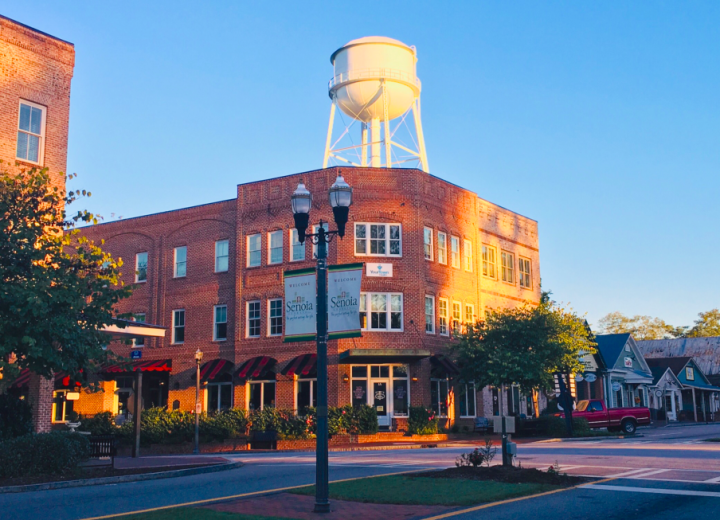
If you're searching for Senoia GA homes for sale, you've probably noticed something important about this community:
Senoia is growing.
The city's historic downtown, strong community identity, proximity to Peachtree City and Newnan, and connection to Metro Atlanta have attracted increasing attention from homebuyers and developers.
Now, one of the most significant development proposals in Senoia's recent history could add a new chapter to that growth.
It's called the 141 South Project.
Located south of Historic Downtown Senoia near Georgia Highway 16 and Luther Bailey Road, the project has been proposed as a large mixed-use development combining residential housing, commercial space, open space, trails, and community amenities.
The project originally entered the regional review process as a 658-unit development on approximately 152 acres, including single-family homes, townhomes, multifamily housing, and commercial space. (urbanize.city)
But the project has evolved.
At a March 2026 Senoia City Council public hearing, the applicant discussed revisions to the plan, including moving an entrance farther down Luther Bailey Road and adding an age-restricted 55+ component. The city was considering annexation and rezoning of the property to R40C, and the council discussion referenced approximately 168.8 units under the applicable ordinance, along with a 40% greenspace requirement. A detailed revised site plan was expected to follow. (senoia.com)
That distinction is important.
The original DRI proposal and the current revised concept are not necessarily the same development plan.
So what could 141 South mean for Senoia homeowners, buyers, sellers, investors, and the broader Senoia GA real estate market?
Let's take a closer look.
What Is the 141 South Project?
The 141 South Project is a proposed mixed-use development planned on approximately 152 acres south of Downtown Senoia.
The property's location places it near:
Georgia Highway 16
Luther Bailey Road
Pylant Street
Existing residential neighborhoods
Downtown Senoia
Major routes connecting Senoia with surrounding communities
The project's scale is what initially attracted regional attention.
The original Development of Regional Impact filing proposed:
246 detached single-family homes
112 attached townhomes
Approximately 300 multifamily units
71,945 square feet of office/retail space
11,438 square feet of restaurant space
Approximately 152 acres
That represented 658 residential units in the original filing. (senoia.com)
The regional transportation review classified the project as a Development of Regional Impact, meaning its size was significant enough to warrant regional review of transportation and infrastructure considerations. (senoia.com)
The Project Has Changed Since the Original Proposal
This is one of the most important updates for anyone researching 141 South in 2026.
The project currently being discussed by the City of Senoia is not simply the original 658-unit plan.
During the March 16, 2026 City Council public hearing, the applicant described changes to the plan, including:
Moving the entrance farther down Luther Bailey Road
Adding an age-restricted 55+ residential pod
Working with Historical Concepts on a revised site plan
Seeking annexation of county property
Seeking R40C rezoning
Approximately 152 acres involved
Approximately 168.8 units referenced under the applicable city ordinance
A 40% greenspace requirement
The applicant indicated that a more detailed revised site plan would come back to the city at a later date. (senoia.com)
For homebuyers, this means one thing:
Don't rely on older articles quoting the original 658-unit plan as though it is still the final approved design.
The project is evolving through the city's planning and approval process.
Why 141 South Matters to Senoia Real Estate
Large developments can influence real estate markets in several ways.
They can increase:
Housing supply
Retail options
Restaurants
Employment
Infrastructure investment
Traffic
Population
Competition among sellers
Buyer choices
The ultimate effect on property values depends on how the project is designed, where surrounding homes are located, how infrastructure is improved, and how buyers respond to the new supply.
There is no automatic rule that says:
"More development equals higher home prices."
The relationship is much more complicated.
Could 141 South Increase Senoia Property Values?
Potentially—but it's important to distinguish direct effects from indirect effects.
A successful mixed-use development could make the surrounding area more convenient and attractive.
New residents could support:
Restaurants
Retail businesses
Services
Recreation
Local employment
Community investment
If those improvements strengthen Senoia's overall appeal, nearby homeowners could benefit from increased buyer interest.
However, increased housing supply can also create more competition for existing homes.
That's why homeowners shouldn't automatically assume their property value will increase simply because 141 South is built.
The Biggest Potential Benefit: More Local Convenience
One of the most interesting aspects of the original 141 South concept was its combination of residential and commercial uses.
The original DRI filing proposed roughly 83,000 square feet of office/retail space and 16,200 square feet of restaurant space in a later revised plan document, illustrating the development's mixed-use direction. (senoia.com)
The concept could help create a situation where residents have more services closer to home.
That could mean:
More restaurants
More retail
Professional services
Everyday conveniences
Potential employment
Additional gathering spaces
For a growing city like Senoia, that type of development could reduce the need to drive to Newnan or Peachtree City for every errand.
Could 141 South Help Downtown Senoia?
This is an interesting question.
At first glance, adding commercial space south of downtown might seem like competition for Historic Downtown Senoia.
But mixed-use development can also bring more people into the broader area.
New residents may:
Visit Main Street
Eat downtown
Shop at local boutiques
Attend festivals
Visit coffee shops
Explore local attractions
The outcome will depend on how the new commercial space is designed and how it complements—or competes with—existing downtown businesses.
Senoia's historic downtown remains one of its biggest assets.
The challenge will be maintaining that identity while accommodating growth.
What Could Happen to Traffic?
Traffic is one of the most important concerns surrounding a project of this scale.
The original DRI transportation analysis estimated approximately 1,120 additional peak-hour vehicle trips per day associated with the original concept. (urbanize.city)
The later GRTA staff report for the original DRI review estimated approximately:
500 AM peak-hour trips
632 PM peak-hour trips
8,388 daily trips
for the original proposed development. (senoia.com)
Those figures relate to the earlier plan, not necessarily the current revised design.
That's another reason buyers should pay attention to updated transportation studies as the project moves forward.
Why the Luther Bailey Road Entrance Matters
The March 2026 city discussion specifically addressed moving the project's entrance farther down Luther Bailey Road. (senoia.com)
For nearby homeowners, access points can matter tremendously.
Traffic impacts aren't determined only by how many homes are built.
They're also influenced by:
Where entrances are located
Road capacity
Intersection design
Turn lanes
Traffic signals
Internal roads
Pedestrian connections
School traffic
Commercial traffic
A well-designed entrance system can distribute traffic more effectively than a poorly connected one.
Could New Roads and Infrastructure Help Existing Homeowners?
Potentially.
Large developments typically require infrastructure improvements.
The original regional review included recommendations related to pedestrian connectivity and sidewalks along the development's Highway 16 frontage. (senoia.com)
That type of infrastructure can benefit more than just the new development.
Improved:
Sidewalks
Trails
Road connections
Drainage
Utilities
Pedestrian access
can improve connectivity throughout an area.
For homeowners, better infrastructure can become a long-term lifestyle benefit.
What About Greenspace?
One of the more important changes discussed in the city's 2026 review is the greenspace requirement.
The March 2026 City Council discussion referenced a 40% greenspace requirement under the R40C zoning framework. (senoia.com)
That's significant.
Large residential developments can feel very different depending on how much land is preserved as:
Parks
Greenways
Buffers
Natural areas
Community open space
For existing neighborhoods, preserved greenspace can help reduce the visual impact of new construction.
It can also make a new community more attractive to buyers.
What Does 141 South Mean for Senoia Homebuyers?
For buyers, the project could create both opportunities and considerations.
More Housing Choices
If the residential portion proceeds, buyers could eventually have additional choices across different housing types.
The original proposal included:
Detached homes
Townhomes
Multifamily housing
The revised plan may differ substantially, so buyers should follow the city's latest site-plan information rather than relying on the original unit mix.
Could More Housing Make Senoia More Affordable?
Possibly—but not necessarily.
Increasing housing supply can create more options for buyers.
However, the impact on prices depends on:
Final unit count
Housing types
Price points
Demand
Mortgage rates
Construction costs
Existing inventory
If the new homes target price ranges that are currently undersupplied, they could give buyers additional choices.
But if demand continues growing rapidly, additional supply may simply help accommodate population growth without causing a major decline in existing home prices.
New Construction Could Create a New Price Benchmark
One interesting effect of a major new development is the creation of new price comparisons.
New homes typically compete with resale properties based on:
Square footage
Finishes
Energy efficiency
Lot size
Amenities
Warranty
Price
If 141 South eventually introduces new homes at attractive price points, existing homeowners may need to position their properties carefully when selling.
That doesn't necessarily hurt existing homeowners.
A well-maintained resale home may offer advantages such as:
Mature landscaping
Larger trees
Established neighborhoods
Larger lots
Renovated interiors
Shorter wait times
But buyers will have more choices.
How Could 141 South Affect Homes Near the Project?
Location will matter enormously.
A property directly adjacent to the development may experience a very different impact than a home several miles away.
Nearby homeowners could experience:
Potential Benefits
Improved roads
New amenities
Restaurants and retail
New trails
Increased convenience
More community investment
Potential Tradeoffs
Construction activity
Traffic
Noise
Less undeveloped land
Changes in views
More nearby residents
This is why buyers considering properties near 141 South should investigate the exact relationship between the home and the proposed development.
What About Homes Near Downtown Senoia?
Downtown-adjacent properties could experience an interesting dynamic.
On one hand, additional residents nearby could increase demand for:
Downtown restaurants
Shops
Events
Local entertainment
On the other hand, additional development could change:
Traffic patterns
Parking demand
Downtown congestion
The visual transition into the historic district
Senoia's downtown is one of its biggest competitive advantages.
Protecting that character while accommodating growth will be important.
Could 141 South Benefit Local Businesses?
This may be one of the most immediate potential benefits.
A larger local population creates more customers.
Businesses that could benefit from increased demand include:
Restaurants
Coffee shops
Boutiques
Grocery and convenience stores
Professional services
Fitness businesses
Healthcare providers
Child-related services
If residents spend more money locally, that can strengthen the overall local economy.
What Does This Mean for Rental Properties?
The multifamily component of the original proposal could be especially relevant to investors.
The original DRI filing included approximately 300 multifamily units. (senoia.com)
However, the current revised plan may differ.
If substantial rental housing ultimately moves forward, investors should watch:
Rental supply
Average rents
Vacancy rates
New apartment competition
Demand from local workers
Population growth
More apartments can increase rental supply, which may moderate rent growth.
But if population and employment grow quickly enough, demand may absorb the additional inventory.
Could 141 South Increase Rental Demand?
It's possible.
New residents attracted to Senoia may include:
Young professionals
Families
Empty nesters
Relocating workers
People moving to the area before buying
Those groups can create demand for both rentals and for-sale homes.
But investors should analyze actual rental comparables before assuming a development will increase rents.
The 55+ Component Is Especially Interesting
One of the most notable changes discussed in March 2026 was the addition of an age-restricted 55+ pod.
City Council minutes indicate that the applicant said this adjustment was intended to help address concerns about the development's impact on the school system. (senoia.com)
This could broaden the project's appeal.
An age-restricted component may attract:
Downsizing homeowners
Empty nesters
Retirees
Buyers who want a lower-maintenance lifestyle
It could also create opportunities for existing Senoia homeowners looking to sell larger homes and move into a smaller property without leaving the community.
How Could 141 South Affect School Demand?
School impact was explicitly discussed during the March 2026 city hearing.
The applicant stated that the addition of the 55+ component would help reduce potential school-system impact. (senoia.com)
That said, school impacts ultimately depend on:
Final unit mix
Number of family-oriented units
Actual occupancy
Student generation
Attendance zones
Future enrollment
For buyers with children, the most important step is still verifying the current school assignment for the specific property.
Why the Project Could Support Long-Term Senoia Growth
One way to look at 141 South is as a signal of developer confidence in Senoia.
The original proposal represented an estimated $250 million investment and was large enough to qualify for regional review. (urbanize.city)
That doesn't guarantee appreciation.
But large private investment can contribute to:
New infrastructure
Employment
Retail
Housing
Tax revenue
Population growth
Community amenities
If those pieces work together successfully, Senoia could become an even more self-contained community.
Why Property Values Could Rise
Several factors could potentially support property values over time:
Increased Amenities
More restaurants, retail, and services can make the community more convenient.
Infrastructure Investment
Improved roads, sidewalks, trails, and utilities can support accessibility.
Population Growth
More residents can create additional demand for housing.
Economic Development
More businesses can support local employment.
Limited Historic Downtown Supply
Senoia's historic homes and downtown properties are inherently limited in supply.
If the broader community becomes more desirable, those unique properties could benefit from increased demand.
Why Property Values Could Also Face Pressure
It's equally important to discuss the other side.
Large development can create:
More Housing Competition
New homes give buyers alternatives to existing properties.
Traffic
More residents and businesses mean more vehicle trips.
Construction Disruption
Large projects can take years to complete.
Changing Views
Wooded or undeveloped land may eventually become buildings, roads, or community amenities.
Different Buyer Preferences
Some buyers specifically choose Senoia for its lower-density character.
If development changes that perception, it could affect demand for certain properties.
That's why the impact won't be identical across the entire city.
The Biggest Question: What Will the Final Project Look Like?
This may be the most important thing for homeowners to understand.
The original 141 South proposal has changed.
The March 2026 City Council discussion indicates that the applicant was working on a revised site plan and expected to return with more detailed information. (senoia.com)
Therefore, buyers should be cautious about treating early renderings or old unit counts as final.
Before purchasing near the project, ask for:
Current site plan
Current zoning
Current annexation status
Current unit count
Current commercial square footage
Entrance locations
Road improvements
Greenspace plans
Construction phases
Current city approvals
Development projects evolve.
The most recent city-approved documents matter most.
What Should Current Senoia Homeowners Do?
If you already own a home in Senoia, don't panic.
A major development does not automatically mean your home value will rise or fall.
Instead:
Watch the Project
Keep track of:
City Council meetings
Planning Commission meetings
Updated site plans
Transportation studies
Annexation decisions
Understand Your Property's Location
If your home is several miles away, the impact may be very different from a property immediately adjacent to 141 South.
Maintain Your Home
Regardless of development, condition remains one of the most important factors in resale.
Focus on:
Exterior maintenance
Landscaping
Roof
HVAC
Kitchen
Bathrooms
Curb appeal
Monitor Comparable Sales
Don't rely on national housing statistics.
Look at what similar Senoia homes are actually selling for.
What Should Buyers Do Before Purchasing Near 141 South?
If you're considering Senoia GA homes for sale near the project, add a development review to your due diligence.
Ask:
Is this property near the 141 South site?
What will be built nearby?
Where will construction entrances be?
Will my view change?
Will traffic increase?
Are new roads planned?
What school zone applies?
What commercial development is proposed?
Could future phases affect the property?
A good local real estate professional can help you identify these questions, but buyers should also review official city documents.
Is 141 South Good or Bad for Senoia?
There's no simple answer.
For some residents, additional housing, restaurants, retail, trails, and infrastructure may make Senoia more convenient.
For others, increased density and traffic may raise concerns about preserving the small-town character that attracted them in the first place.
Both perspectives are understandable.
The real question is whether the final development successfully balances:
Growth + infrastructure + preservation + quality of life.
That will ultimately determine how the project is viewed by residents and buyers.
How 141 South Fits Into Senoia's Bigger Growth Story
The 141 South Project isn't happening in isolation.
Senoia is already experiencing:
Population growth
New residential development
Downtown investment
Commercial expansion
Infrastructure improvements
Increasing buyer demand
Current housing data reflects that demand. Redfin reported a median Senoia sale price of approximately $536,600 for the three months ending August 2026, while Zillow reported a typical Senoia home value of approximately $509,800 at the end of August. Realtor.com reported a median sold price of approximately $546,150 for August. (redfin.com) (zillow.com) (realtor.com)
Different platforms use different methodologies, so these figures should be treated as market context rather than a single definitive "Senoia home price."
The broader trend is clear:
Senoia has become a much more established South Metro Atlanta housing market.
What Could Happen Over the Next 5–10 Years?
If 141 South moves forward substantially, Senoia could look noticeably different by the early-to-mid 2030s.
Potential changes could include:
More residents
More restaurants
More retail
Additional housing choices
Improved infrastructure
More traffic
New community amenities
Greater economic activity
Urbanize Atlanta reported that the original project schedule could extend into spring 2034, illustrating how long a development of this scale could take. (urbanize.city)
That means this isn't simply a one-year real estate story.
It could influence Senoia for a decade.
Final Thoughts: How Could 141 South Impact Senoia Property Values?
The 141 South Project has the potential to become one of the most important development stories in modern Senoia.
But buyers and homeowners should avoid making assumptions based on the original 658-unit proposal.
The project has been revised, and the City of Senoia's March 2026 discussion indicates that the applicant was continuing to refine the site plan, entrance configuration, residential mix, and age-restricted component. (senoia.com)
For property values, the likely impact will depend on what ultimately gets built.
A successful mixed-use project could bring:
More local shopping
Restaurants
Housing options
Infrastructure
Employment
Community amenities
Those improvements could strengthen Senoia's overall appeal.
At the same time, homeowners near the project may need to account for:
Construction
Traffic
Changing views
Increased density
New competition from additional homes
For buyers, that means the 141 South Project shouldn't automatically be considered either a reason to buy or a reason to avoid the area.
Instead, it should become part of your due diligence.
Know where the project is.
Understand the current plan.
Study the roads.
Look at the surrounding homes.
Review the current zoning and approvals.
And think about how the community may change over the next five, ten, or even twenty years.
That's especially important when you're investing in Senoia GA real estate.
Thinking About Moving to Senoia, GA?
Whether you're searching for a home near Downtown Senoia, a new construction community, an established neighborhood, or property farther outside the city center, the Tim Stout Group with eXp Realty can help you understand how current and future development may affect your real estate decision.
We can help you compare:
Senoia GA homes for sale
New construction
Historic homes
Homes near Downtown Senoia
Heritage Pointe
Fieldstone Estates
Keg Creek Landing
Savannah Crossing
Homes near 141 South
Senoia GA home prices
Current Senoia GA real estate market trends
Coweta County relocation options
For anything real estate related in Senoia, Newnan, Peachtree City, and surrounding Coweta County, trust the local real estate experts at the Tim Stout Group with eXp Realty.
